
Sanctuary Observation Notes
Coastal Bird Nesting Has Begun!
April, 2026
The breeding season for coastal birds in South Carolina is upon us! Pairs of shorebirds like the American Oystercatchers and the state threatened Wilson's Plovers have already been sighted at Hunting Island State Park, setting up territory and creating scrapes in the sand where they will soon lay their eggs. Unlike solitary nesting shorebirds, seabirds like the state threatened Least Tern will set up in colonies and rely on others in the flock to alert for potential threats. While Least Terns have not yet been spotted at Hunting Island State Park this season, they’ve been seen along other parts of the South Carolina coast and may arrive any day.
To make sure these birds have undisturbed places to nest and raise young, the coastal bird program at SCDNR leads the efforts in temporarily roping off suitable nesting habitat during this time of year.
With materials purchased BY Friends of Hunting Island State Park, Inc., South Carolina Department of Natural Resources biologists and volunteers with FOHI and Audubon South Carolina got together to install seasonal closures on the north end of the island marked with signage and symbolic fencing.
All who visit the area can contribute to their success by following regulations in place, such as:
🔺 No dogs allowed on the beach beyond the campground
🔺 Staying out of posted areas
🔺 Walk below dry sand area and out of dunes
🔺 Give birds plenty of space as to not cause them to fly off
Thank you!
Cami Duquet
Marine Biologist,
Coastal Bird Program
SCDNR


February, 2026
A picture is worth a thousand words, and in this case it captures more than 5,000 shorebirds utilizing the critical sanctuary at North Beach at Hunting Island State Park. Each winter, thousands of shorebirds travel to South Carolina to rest and recover after a demanding breeding season in the Arctic. Some of these species include Dunlin, Semipalmated Plovers, Sanderlings, Short-billed Dowitchers, and Ruddy Turnstones. They all depend on expansive, undisturbed beaches such as North Beach to survive the winter months.
During high tide, when their feeding areas are submerged, these birds gather on dry sand to rest. They tuck their bills into their feathers and often stand on one leg to conserve heat and energy, waiting patiently for the tide to recede. As the water drops, they peel off in small groups to forage for invertebrates and small crustaceans hidden in mudflats and sandy shores. Seeing thousands of birds huddled together, living in rhythm with the tides, is an incredible sight. Because even a single disturbance can force the entire flock to fly off and expand precious energy, it is critical that this area remains protected and visitors are aware of the birds in this sensitive area. Thankfully, there is ample space for people to observe from a respectful distance, allowing the birds to continue resting undisturbed.
Among the flock, several Wilson’s Plovers were also observed. Listed as state threatened in South Carolina, these birds nest on our beaches during the summer, including on Hunting Island, but little is known about where they spend the winter. Seeing them here at North Beach during the nonbreeding season is quite a treat. While they resemble the smaller Semipalmated Plover (pictured on the left), Wilson’s Plovers (right) are slightly larger and can be identified by their longer, thicker bill, perfectly adapted for catching fiddler crabs. Come check them out at North Beach!
Author -
Cami Duquet, Wildlife Biologist
SCDNR, Charleston, SC


December, 2025
In mid-December 2025, biologists from the South Carolina Department of Natural Resources (SCDNR), along with Friends of Hunting Island Shorebird Steward volunteers, set up temporary fencing on the North Beach at Hunting Island State Park. This area, located north of the campground, is designated as a critical shorebird sanctuary habitat. It provides a vital resting and feeding area for a wide variety of birds year-round, including nesting habitat during the spring and summer. Due to this special designation, dogs and golf carts are not allowed on this section of the beach.
The fencing creates a safe enclosure within the designated sanctuary, offering shorebirds a disturbance-free area to rest and preen their feathers without interference from human activities. Species such as the federally threatened Piping Plover, along with Dunlin, Semipalmated Plovers, and Sanderlings, regularly use the area, especially during high tide when available space is limited.
Shorebirds have experienced significant population declines over the past few decades, making it increasingly important to ensure they have safe habitats during the winter months. When disturbed, these birds are forced to fly, expending valuable energy that would otherwise be used for resting, feeding, and recovering from long migrations and demanding breeding seasons.
Next time you visit North Beach at Hunting Island, be sure to watch for the enclosure. Admire the birds from a distance and give them plenty of space to avoid causing unnecessary stress. This small action helps protect the peaceful habitat these birds need to thrive and ensures they remain a part of the Hunting Island experience for everyone.
Author -
Cami Duquet, Wildlife Biologist
SCDNR, Charleston, SC
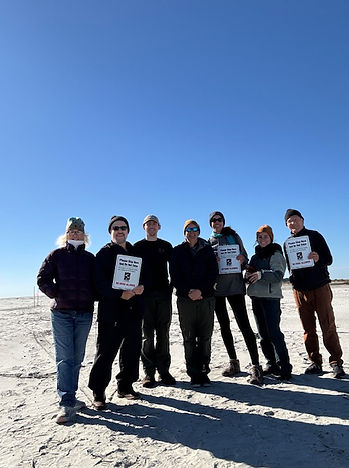
SCDNR Biologists and FOHI Shorebird
Steward Director and volunteers

New Signage 2026

Human footprints vs Shorebird and
Seabird footprints